
The nitty gritty details of the study: The methodology section describes how this research was conducted, as well as, how bias is recognized and mitigated. It gives readers a chance to check whether my approach is accurate, dependable, and designed well. Do the findings make sense in light of the design?

Big Sur, California… where every rock in the ocean looks like a whale!
Participant quote… tbd
Study Area
The U.S. conservation and environmental sector is large, diverse, and organizationally fragmented. Cause IQ identifies more than 34,000 environmental organizations in the United States, collectively employing nearly 148,000 people and generating more than $31 billion in annual revenue. These organizations work across a broad range of issues, including natural resource conservation, land protection, water and wetland conservation, environmental education, pollution control, and energy conservation1.
The sector encompasses organizations of dramatically different sizes and structures. More than 7,500 organizations report annual revenues below $250,000, while only 31 report revenues exceeding $100 million (Cause IQ, 2026). It also includes national organizations, regional and state-based groups, local conservation organizations, Indigenous environmental organizations, and issue-specific nonprofits operating across varied geographic and institutional contexts2.
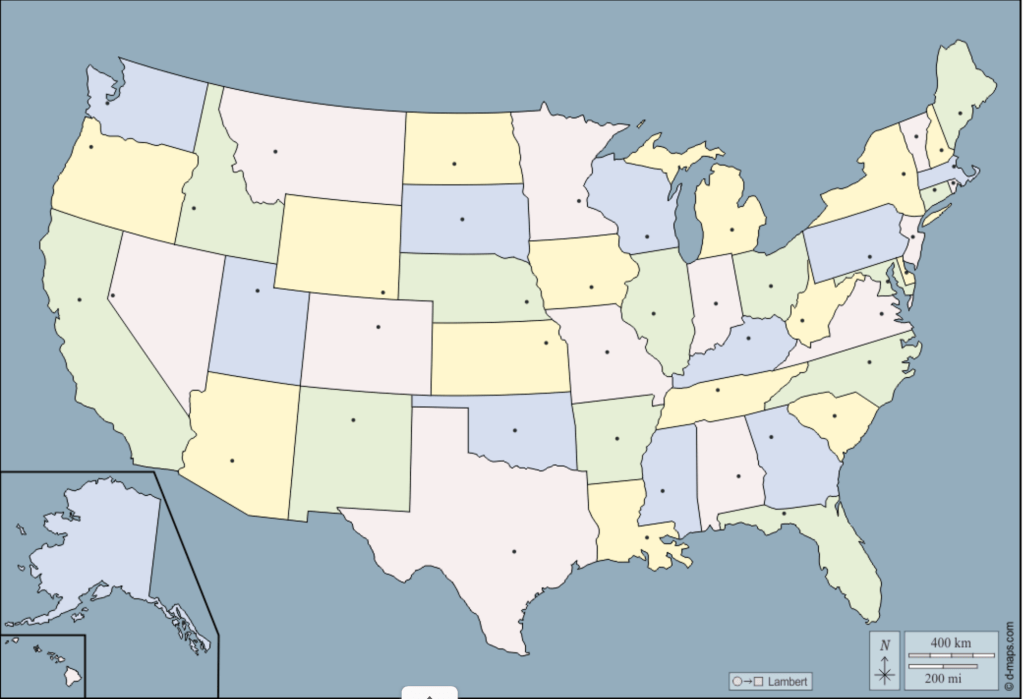
This study draws participants from this broader U.S. conservation and environmental landscape. The sampling frame intentionally reflects the sector’s diversity in organizational scale, geographic scope, institutional context, and approaches to conservation and environmental work. This breadth provides a basis for examining how organizations understand and translate learning into action across different contexts.
Interview & STUDY methods
Study Design
The methodology describes how the research was conducted and provides a basis for assessing the appropriateness, dependability, and credibility of the research approach. A clearly articulated research design also allows readers to evaluate whether the findings are supported by the methods used to generate and analyze the data3 4. This study uses a qualitative research approach based on in-depth, semi-structured interviews. Qualitative inquiry is well suited to research seeking to understand how people interpret and describe their experiences, perspectives, beliefs, and decision-making within a particular social context5 . Research examining human behavior more broadly also suggests that opinions, emotions, personality characteristics, and context can make individual decision-making difficult to describe quantitatively.
Given the purpose of this study, qualitative interviews provide an opportunity to explore these experiences in greater depth. The approach also provides context for understanding the decisions people make within their particular circumstances6 7. Semi-structured interviews provide consistency across participants while allowing researchers to pursue relevant topics that emerge during individual conversations8. This approach was therefore selected to examine the experiences, perspectives, decision-making, and beliefs of people working and volunteering in the U.S. conservation sector. A structured interview guide creates consistency across interviews while allowing flexibility to explore issues raised by individual participants9 . The methodological approach was also informed by reflection on previous research concerning conservation and equity, as well as the inherently complicated realities involved in evolving the conservation field, expanding its benefits, and redistributing its burdens.
Pilot Interviews and Development of the Interview Guide
Prior to beginning the full interview process, two pilot interviews were conducted with individuals willing to provide feedback on the interview experience. Data from these interviews are not included in the study dataset. Feedback from the pilot interviews was used to refine the interview guide10 . The final interview guide is available here: XXX.
Recruiting Interviewees
Participants were eligible if they were 18 years of age or older and demonstrated a strong, self-identified investment in U.S.-based conservation extending beyond minimum workplace or organizational requirements. Eligibility was not restricted to a particular conservation role. Participants could work or volunteer within the conservation sector, allowing the study to include a range of professional and experiential perspectives. Recruitment followed a multi-path approach intended to capture diverse viewpoints from across the United States. Recruitment strategies included:
- Outreach through LinkedIn using recruitment materials and an embedded interest and eligibility form.
- Direct outreach through professional and personal connections developed through work and board roles.
- A website containing recruitment information and an embedded interest and eligibility form.
XXX number of people were contacted and XXX agreed to participate.
The use of multiple recruitment pathways was intended to broaden the participant pool beyond the researcher’s immediate professional network. Particular attention was given to the possibility that professional and personal networks could disproportionately include people who share similar experiences, beliefs, or perspectives.
Conducting Interviews
The use of semi-structured, in-depth interviews requires direct interaction between the interviewer and participant, whether conducted virtually or in person. This interaction makes the interviewer’s tone, body language, verbal and non-verbal cues, and potential personal or professional biases important considerations in the quality of participant responses and resulting data11 . Interviews lasted approximately 60 minutes, and participants received a custom-designed enamel pin as a token of appreciation for their participation.

The principal investigator conducted all interviews either virtually through an encrypted Google Meet Workspace or in person at locations selected by participants, including coffee shops, offices, and restaurants. Allowing participants to select the setting was intended to support comfort and relationship building during the interview process. A single interviewer conducted all interviews to reduce potential variation in how questions were presented and responses interpreted. Because interviews followed a semi-structured format, the interviewer used follow-up questions and prompts to explore participants’ responses and develop a more thorough dataset relevant to the research questions. The interview guide used as the basis for each interaction is included in [Appendix X / link].
Interviews began with demographic questions in an attempt to help build rapport between the interviewer and the respondent, allow time for the participant to warm up to the idea of being interviewed, and to provide ample time for the participant to think about the subject before being asked challenging questions. An individual may feel like they are being attacked or unprepared if difficult questions are presented initially12 . Demographic information from these initial questions is found below in Table 2, ‘General Demographics of Study Participants’-???
Table 2. General Demographics of Study Participants – TBD
| Volunteer/Paid Professional | Years in Conservation | |
| No. of Volunteers: ? | ||
| No. of Paid:? |
Qualitative Analysis Methodology
The principal investigator transcribed approximately 50 hours of recorded audio using automated transcription tools. Virtual interviews were recorded through Google Meet, while recordings from in-person interviews were captured using Microsoft Word and a recording device.
In addition to interview recordings, the researcher maintained interview memos documenting observations such as tone, nonverbal communication, environmental sounds, and distractions. These observations were incorporated into the transcription and analysis process to support transparency and a more comprehensive understanding of the interview context13. Following transcription, interview materials were uploaded to Dedoose for thematic coding.
Following Pearl Institutional Review Board (IRB) requirements, audio, video, and digital recordings are stored on secured, access-controlled systems and will be destroyed upon completion of the research14 .
Coding
Coding involves organizing and summarizing source material around categories, patterns, concepts, and themes15 .
Analysis involved repeated reading of transcripts and, where appropriate, repeated listening to recordings. This deep engagement with the data supports the development and refinement of categories and themes16 17.
The researcher used progressive focusing, an adaptive, reflective, and iterative approach to qualitative analysis18 . The analysis began with COM-B model, initial research questions, and literature review as foundations. At the same time, the semi-structured design allowed interview emphasis and conceptual understanding to evolve as data were collected and analyzed.
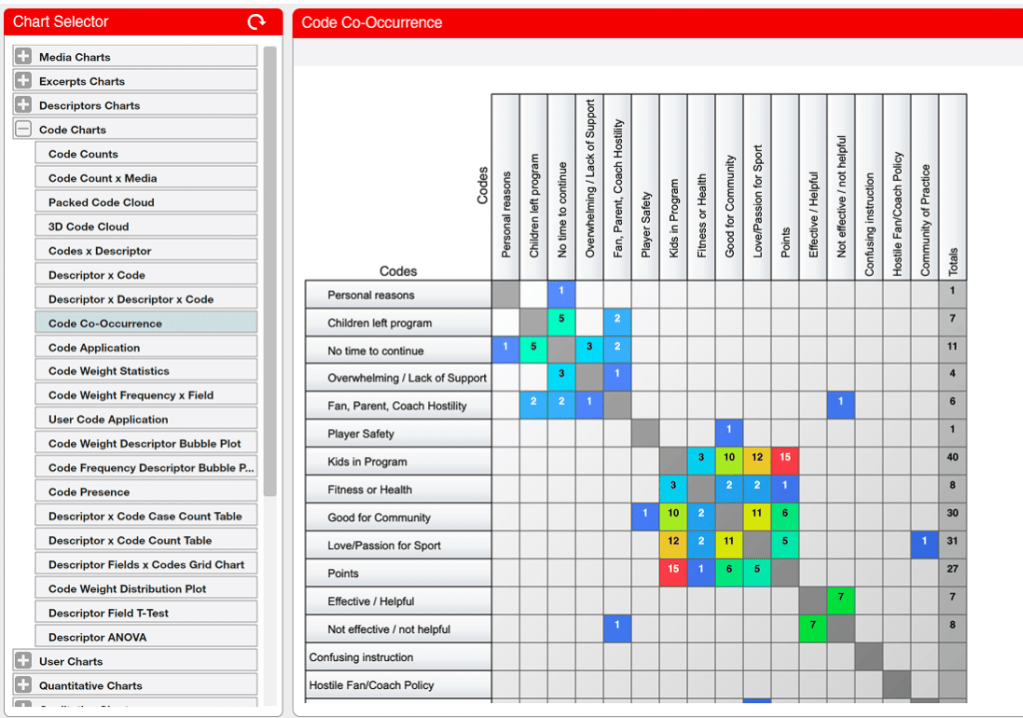
XX pages of interview transcripts were produced during the study, using Dedoose19 providing an extensive body of qualitative data for analysis.
The full coding database developed through this study is available here: XXXX.
Data Security and Confidentiality
The study followed approved Institutional Review Board guidelines governing the use of audio, video, and digital recordings. Interview files are secured in locked systems to protect participant privacy and will be destroyed upon completion of the research in accordance with applicable requirements.
ADDRESSING BIAS IN THE RESEARCH
“Human beings are not neutral and they live in their subjective social world.” – Azher Hameed Qamar, Ph.D.
Researchers bring their own experiences, assumptions, relationships, and perspectives to the research process. In qualitative research, the relationship between interviewer and participant can influence both the interaction and the resulting data20. As the principle researcher, I was important for me to consider potential sources of bias throughout participant recruitment, interviewing, transcription, and analysis. I am equally human in this work.
Interviewer Bias
In-depth interviews depend upon direct interaction between interviewer and respondent. The interviewer’s tone, body language, verbal and nonverbal cues, and previous personal or professional experiences may influence participant responses and the quality of the resulting data9,10. The decision to use one interviewer for all interviews helped reduce variation in question presentation and interpretation. The use of a common semi-structured interview guide also provided consistency across interviews while allowing appropriate follow-up questions21 22.
Confirmation Bias
Confirmation bias occurs when researchers give greater attention or weight to information that confirms pre-existing expectations or beliefs23. Because this study examines conservation and equity, the researcher recognized the possibility that personal experiences and existing beliefs could influence the questions asked, the order in which questions were presented, follow-up questions, and interpretation of responses.
To address potential confirmation bias, the researcher used reflexivity, negative case analysis, peer debriefing, and an audit trail throughout the analysis process. These practices encouraged critical examination of assumptions, deliberate attention to evidence that challenged emerging interpretations, external review of analytic decisions, and documentation of how codes and themes developed over time24 25.
Expectation Bias
Expectation bias can occur when researchers interpret evidence in ways that align with anticipated findings26. The researcher used an iterative analysis process and allowed themes to emerge from participant narratives rather than relying exclusively on predetermined categories. The role of the initial research questions, revisions after the pilot interviews, and literature review was to provide a foundation for inquiry while allowing conceptual understanding to evolve as data were collected and analyzed17,18.
Observer-Expectancy Effect
The observer-expectancy effect describes the possibility that a researcher’s expectations may unintentionally influence how data are collected or interpreted27. Because the principal investigator conducted the interviews and analysis, this potential source of influence is particularly relevant to the study. Interview memos, consistent use of the interview guide, iterative coding, and documentation of the analytic process provide opportunities to identify and examine researcher influence.
Participant Selection Bias
Participant selection presents another important potential source of bias. The researcher’s personal and professional networks may disproportionately include people who share similar backgrounds, experiences, or beliefs28. The recruitment strategy therefore intentionally used multiple pathways to reach participants and sought to include a range of roles, experiences, and perspectives within U.S. conservation. The researcher will report participant characteristics and recruitment pathways to allow readers to assess the diversity and limitations of the sample.
REFERENCES
- Cause IQ. (2026). Environmental organizations. https://www.causeiq.com/directory/environmental-organizations-list/ ↩︎
- Wikipedia contributors. (2026). List of environmental and conservation organizations in the United States. In Wikipedia. https://en.wikipedia.org/wiki/List_of_environmental_and_conservation_organizations_in_the_United_States ↩︎
- Creswell, J. W., & Poth, C. N. (2018). Qualitative inquiry and research design: Choosing among five approaches (4th ed.). SAGE Publications. ↩︎
- Lincoln, Y. S., & Guba, E. G. (1985). Naturalistic inquiry. SAGE Publications. ↩︎
- Patton, M. Q. (2015). Qualitative research & evaluation methods: Integrating theory and practice (4th ed.). SAGE Publications. ↩︎
- Clarke, A. M., & Jack, B. (1998). The benefits of using qualitative research. Professional nurse (London, England), 13(12), 845–847. ↩︎
- Prokopy, L. S. (2011). Agricultural human dimensions research: The role of qualitative research methods. Journal of Soil and Water Conservation, 66(1), 9A–12A. https://doi.org/10.2489/jswc.66.1.9A ↩︎
- Kallio, H., Pietilä, A.-M., Johnson, M., & Kangasniemi, M. (2016). Systematic methodological review: Developing a framework for a qualitative semi-structured interview guide. Journal of Advanced Nursing, 72(12), 2954–2965. https://doi.org/10.1111/jan.13031. ↩︎
- Maxwell, J. A. (2012). A realist approach for qualitative research. SAGE Publications. ↩︎
- Gubrium, J. F., & Holstein, J. A. (Eds.). (2000). Analyzing interpretive practice. SAGE Publications. ↩︎
- Gubrium, J. F., & Holstein, J. A. (Eds.). (2000). Analyzing interpretive practice. SAGE Publications. ↩︎
- Creswell, J. W. (2005). Educational research: Planning, conducting, and evaluating quantitative and qualitative research (2nd ed.). Pearson Education. ↩︎
- Lapadat, J. C., & Lindsay, A. C. (1999). Transcription in research and practice: From standardization of technique to interpretive positionings. Qualitative Inquiry, 5(1), 64–86. https://doi.org/10.1177/107780049900500104 ↩︎
- Pearl IRB. (2021). Investigator manual (Version 5). https://www.pearlirb.com/wp-content/uploads/2021/11/INVESTIGATOR-MANUAL-aahrpp-2021.pdf ↩︎
- Saldaña, J. (2013). The coding manual for qualitative researchers (2nd ed.). SAGE Publications. ↩︎
- Patton, M. Q. (2002). Qualitative research & evaluation methods (3rd ed.). SAGE Publications. ↩︎
- Marshall, C., & Rossman, G. B. (2006). Designing qualitative research (4th ed.). SAGE Publications. ↩︎
- Sinkovics, R. R., & Alföldi, E. A. (2012). Progressive focusing and trustworthiness in qualitative research: The enabling role of computer-assisted qualitative data analysis software (CAQDAS). Management International Review, 52(6), 817–845. https://doi.org/10.1007/s11575-012-0140-5 ↩︎
- Grummert, S. E. (n.d.). Data visualizations to further your analysis. Dedoose. https://www.dedoose.com/blog-story/data-visualizations-to-further-your-analysis ↩︎
- Kahlke, R., et al. (2022). A practical guide to reflexivity in qualitative research: AMEE Guide No. 149. Medical Teacher, 44(3), 241–251. https://doi.org/10.1080/0142159X.2022.2057287 ↩︎
- Barriball, K. L., & While, A. (1994). Collecting data using a semi-structured interview: A discussion paper. Journal of Advanced Nursing, 19(2), 328–335. https://doi.org/10.1111/j.1365-2648.1994.tb01088.x ↩︎
- Kallio, H., Pietilä, A.-M., Johnson, M., & Kangasniemi, M. (2016). Systematic methodological review: Developing a framework for a qualitative semi-structured interview guide. Journal of Advanced Nursing, 72(12), 2954–2965. https://doi.org/10.1111/jan.13031 ↩︎
- Nickerson, R. S. (1998). Confirmation bias: A ubiquitous phenomenon in many guises. Review of General Psychology, 2(2), 175–220. https://doi.org/10.1037/1089-2680.2.2.175 ↩︎
- Anney, V. N. (2014). Ensuring the quality of the findings of qualitative research: Looking at trustworthiness criteria. Journal of Emerging Trends in Educational Research and Policy Studies, 5(2), 272–281. ↩︎
- Lincoln, Y. S., & Guba, E. G. (1985). Naturalistic inquiry. SAGE Publications. ↩︎
- Rosenthal, R. (1966). Experimenter effects in behavioral research. Appleton-Century-Crofts. ↩︎
- McCambridge, J., Kypri, K., & Elbourne, D. (2014). Research participation effects: A systematic review of the magnitude, scope, and findings of experimental studies of the impact of participation on subsequent behaviour. PLOS ONE, 9(3), e90515. https://doi.org/10.1371/journal.pone.0090515 ↩︎
- Noy, C. (2008). Sampling knowledge: The hermeneutics of snowball sampling in qualitative research. International Journal of Social Research Methodology, 11(4), 327–344. https://doi.org/10.1080/13645570701401305 ↩︎
 Learning That Moves: Advancing Equity in United States Based Conservation
Leave a comment